
We.
The dystopian, self-awareness, order and subverting the panopticon.

I’ve been dragging my feet on writing this week because this kind of essay feels like it’s been done (and overdone) before. The dystopian is perpetually en vogue, and modern politics in some parts of the world are edging eerily close to some of fiction’s most troubling hypotheticals. There is a liminal feeling about life, an apathetic unseriousness, and an strange fog around what is real and what is true: I’ve felt it most heavily since 2020: something changed. We became much more online, tech companies got even spookier, our news feeds became more personalised, facts are apparently negotiable now, and it feels like privacy doesn’t exist anywhere, even in our homes. Perhaps, if you discontinue your internet, throw out your phone, and actively choose to live in a pre-wired state it may be attainable, but even then, the panopticon is real and as soon as you step outside your door, it is on to you again.
*As with my other book reflections, spoilers await.
Reading “We” provoked both a sense of pleasure and anxiety. It is captivatingly structured and features some beautiful prose; I love how Zamyatin paints such a precise picture. The way the story is told pulls you into this liminal space; a very uncanny state similar to that of my other most recent read, “I Who Have Never Known Men”. Some of the all-seeing, over-reaching aspects of OneState, the setting for the novel, may not always exist here and now in the physical or political sense, but they are certainly perpetuated in the digital realm across all borders.
I thought about order and routine and the importance that identity has in human flourishing. The citizens of the walled city of OneState merely survive in a government-enforced version of “happiness”, but it is not happiness in the natural sense. They are regimented, constantly observed, and sacrifice personal freedom and privacy for the sake of social order. It is only happiness because the state says it is happiness and they exist under a very well-controlled illusion that this is the embodiment of a society perfected.
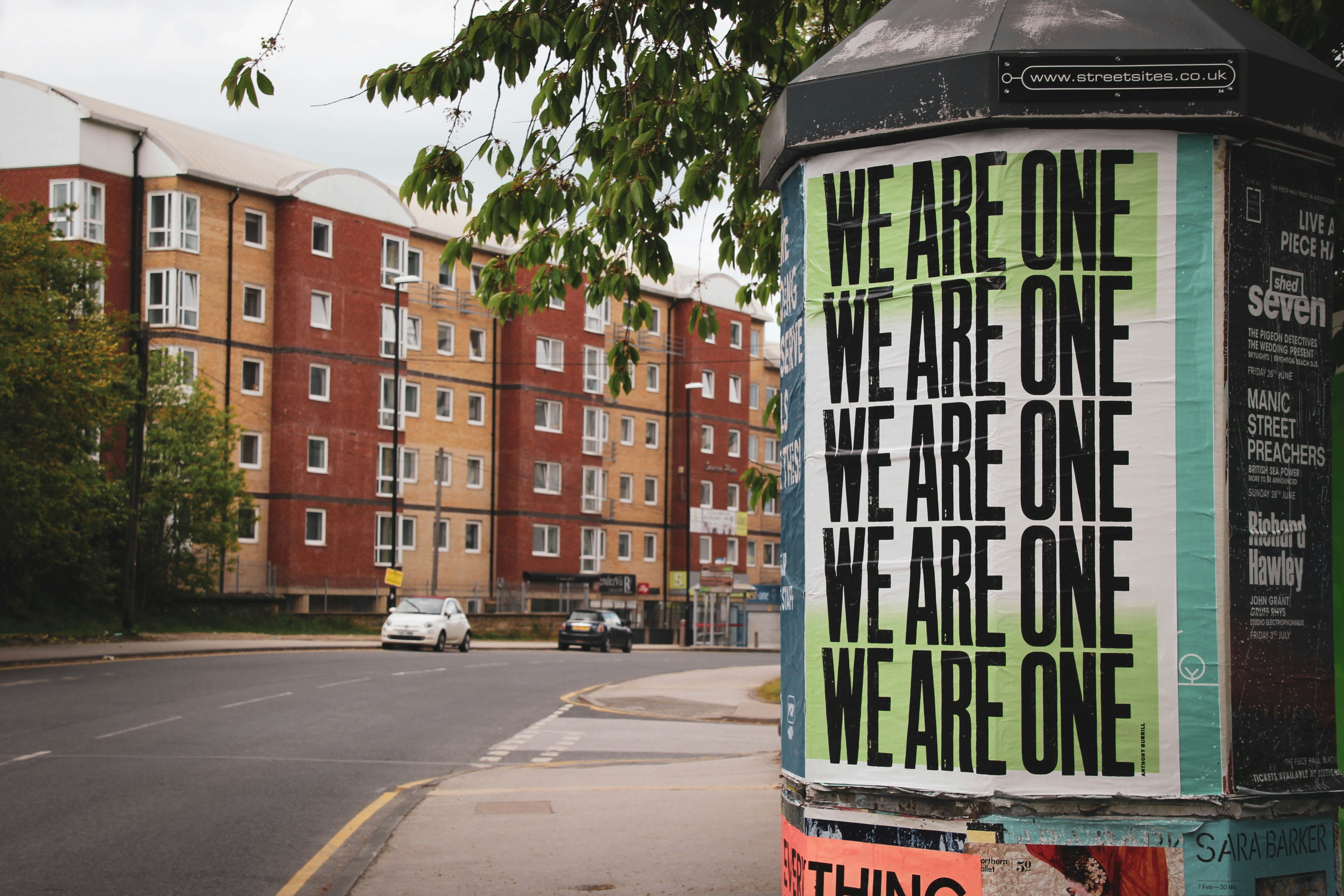
In OneState, people no longer have names. They are assigned numbers. OneState is ruled by The Great Benefactor, who is essentially a king who never loses an election.
We have nothing to conceal or to be ashamed of; we celebrate our elections openly, honestly in the light of day. I can see how all give their votes for the Benefactor - all can see how I give my vote for the Benefactor - and how can things be otherwise since all and I are the one We? (138)
All rules and laws are sourced from reason: logic, order, and mathematics are seen as the pinnacle of human achievement, because they produce sound, predictable results, and inspire people to live as a We as opposed to, an I. Everyone is a subject to the all-knowing, all-seeing OneState; subjugated, asking no questions, even when punished. Instead, sanctions are met with a sense of duty, even honour. At one point, D even refers to it as a “right” to receive punishment. (118)
There is no individual. There is no freedom. Routine is strictly adhered to.
It is for you to place the beneficial yoke of reason round the necks of the unknown beings who inhabit other planets - still living, it may be, in the primitive state known as freedom. (1)
The only privacy built into their lives is for sex, and even that is carefully planned: your needs are scientifically determined by the state through testing, then, you must book a ticket with the individual of your choosing and only then can you draw the curtains on your glass house. As such, there are no deeply personal intimate relationships in OneState: everyone belongs to everyone else, in every sense. The familial structure has also been done away with and children are raised by the state.
It’s natural that once hunger had been vanquished, (which is algebraically the equivalent of attaining the summit of material well-being), OneState mounted an attack on that other ruler of the world, Love. Finally, this element was also conquered, i.e., organised, mathematised, and our Lex sexualis was promulgated about 300 years ago, “Any Number has the right of access to any other Number as a sexual product. The rest is purely a technical matter…you fill out a declaration that on your days you’d like to make use of Number (or Numbers) so-and-so and they hand you the corresponding book of tickets (pink). And that’s it. (19)
Published in 1924, but not in the author’s native Russian until 1988, the novel serves as a dystopian archetype and inspired Orwell’s “1984”.
Self-awareness.
Our narrator is D-503. D is the lead architect of a spaceship, the Integral, whose mission is to spread, ‘mathematically infallible happiness’ into the universe. “We” is told through a journal format, which is especially fitting because the real intrigue of the story is his growth and the rising level of self-awareness that allows him to see the reality of the oppressive system he lives in and works for. These are D’s writings which outline for any future aliens who may encounter Integral, the details of OneState, in hopes that they too will enact reason as their guide.
D is upstanding in the eyes of the state. He enthusiastically abides in every sense and is exceedingly proud of his service on the Integral project. He even busies himself solving mathematical formulas in (what I will loosely call) his free time. He is the type of person who nowadays might be a proponent of data collection and mass surveillance, insisting that it doesn’t hurt those who have nothing to hide and can be used to deter crime and contribute to a safer society. He is bought in, patriotic, a defender of and contributor to, OneState’s system. At the outset, its hard to believe he would ever come to a place of doubt and eventually openly rebel, but I think this serves as a poignant reminder that sometimes, even the truest of believers in anything can change their minds if they dare to be curious enough and more objective. There is great power in free-thought.
His allegiance slowly comes under threat after meeting I-330. As one of his assigned sexual partners, she takes the opportunity to begin to convince him that he ought to second guess OneState and join her cause in an insurrection. It starts slowly: she drinks alcohol and smokes tobacco in his presence, both substances which are banned by OneState and tempts him to stay with her past the prescribed Personal Hour they are allotted. She instructs him on how to get sick notes to get out of work so they can spend time together and gradually ups the stakes until she convinces D to try and sabotage the Integral project.
They meet up multiple times at what they refer to as, The House of Antiquity: the only opaque building in OneState. It serves as a museum for their ancestor’s way of life…how we live today. D is fascinated by the house and is clearly inquisitive about that ancient way of life, something I-330 takes advantage of as she slowly pulls on that thread. I thought too that it was a great jumping off point because it is what seems to light the initial spark of curiosity for D’s eventual introspection and realisation that to be an individual, with an imagination and creative thoughts is not a crime.
We > I: identity and happiness.
We’re used to having the freedom to choose our personal world view and image: we dress ourselves, curate our artistic tastes, decide which politics to support, and with few exceptions, live as we please. However, if you’re even at least partially aware that the state or corporations are keeping tabs on what you say and do and like or dislike, you might begin to subconsciously hide certain things about your personality and seek out more private means of communication or worse, resign yourself to not speaking authentically at all. In many ways, I suspect that because of the tech-laden lives most of us have adopted, we don’t live as freely as we think we do. We may suppress certain political opinions online or in certain circles or try to signal our allegiance to some such cause because if we don’t, the group will disown us. It feels like with every passing year, there is less and less room for the most truly outspoken and honest kind of communication. We worry it might be met with unpleasant consequences: anything from ridicule online to a misunderstanding with a family member or loved one, to the loss of a job or excommunication from a place of worship; and so in turn, we shut ourselves down, hole up in our own little world, cover our eyes, and hope the state of the world improves one day.
This is no way to live and “We” demonstrates how unhealthy this dynamic can be.
Once D gets a taste of freedom, even in the face of severe consequences at the hands of OneState, he is overcome and can see himself as an I, at last. For a moment, he became wholly individual, elevated above the crowd because he dared to see reality for what it truly was.
It was totally strange, intoxicating: I sensed myself above everyone; I was…myself, something separate, a world; I stopped being one of many, the way I’d always been, and became just one. (135)
This is the type of freedom we can all aspire to. In certain circumstances, in some places, the risk is high, which compels me to think all the more that our identity; those beliefs which are nearest to our heart, our sense of justice, compassion, and creativity, should be vigourously protected.
Love.
Underneath all of the other themes, I can’t help but feel like Zamyatin is also signalling the importance of love and lasting intimate connection. D comes to love I-330 deeply, and its nothing he’s ever felt before. He even stops seeing O-90, the woman he is most intertwined with at the outset of the novel, because of I and the effect she is having on his life. There is a lot at play: you get the impression he and O are as close as two people could get to being soulmates in OneState when this story begins. His love for I is also complicated by the fact that she more or less inserted herself into his life because of his status surrounding the Integral project. Regardless of her malicious intent, D comes to love her and this love is what compels him to rebel, to finally act more freely than he ever has before.
As he falls for her, he is becoming more like the Ancients he so constantly derides for their relationship habits and ideals, but underneath it, you get the sense that his humanity is crying to be released. There is an intense feeling of repression and it feels bound to boil over the more you read. As his feelings develop for I, he is becoming more human and discovering something so deeply ingrained in all of us; the desire for the joy and comfort that comes from being in a romantic relationship. Its such a natural state for us as humans that it is hard to imagine being deprived of it.
Oh, if only I could stand up right this minute and - even if it choked me - scream out the whole truth about myself. So it would be the end of me, so what! At least for one second I’d feel that I was clean, I’d feel that all the thoughts had been swept out of my head, and I’d be like the tender sky. (120)
This quote runs through D’s mind on the Day of Unanimity, when all citizens of OneState cast their vote for the Benefactor in total openness. I-330 is there to undermine it by causing a scene but is stopped by the Guardians (OneState police). It is unfathomable he would ever sacrifice his allegiance to OneState until he meets I and develops feelings for her. Love can change our mind. Love can inspire grand works of art, and it can make us do things we’d never previously imagined: go against our own principles, resign previously held opinions or beliefs, or finally take up the cause which we feel we’ve been deigned to defend.
Since love is forbidden in OneState, there is less room for acts of the heart, which is to the state’s benefit. Part of the allure of love and its reason for leaving us satisfied and empowered, is its ability to inspire. Zamyatin must have appreciated then, the capacity love has to both soften and embolden us, and understood the necessity it plays in a healthy, happy life. By showing us a society without love, we can see more clearly our intense need for it.

All I want is one thing: I-330. I want her to be with me every minute, each and every minute, only with me. And all that stuff I just wrote about on the Day of Unanimity - nobody needs it, it’s all wrong, I want to cross it out, tear it up, throw it out. Because I know (maybe this is blasphemy, but it’s true) that the only holiday for me is being is being with her, only if she’s next to me, shoulder to shoulder. (117)
Reason and imagination.
The highest thing in man is his reason and what the work of reason comes down to is the continual limitation of infinity, dividing infinity into convenient, easily digestible portions: differentiation. This is exactly what constitutes the divine beauty of my element, mathematics. (56)
Reason is pointed to as the be-all-end-all; necessary for social order and productivity. D insinuates multiple times that lack of reason is to blame for the ills of the Ancients. Reason is the new religion in OneState.
It made me think a lot about my personal progression from an Evangelical Christian, to atheism, to the more open-minded agnostic I am today: I recall that death of a thousand cuts, spurred by reading more curiously and an innate interest to understand what life is really about. Reason was an integral part of my journey, but eventually, it felt like it was robbing me of my deepest sense of mystery and even, hope. Though Zamyatin doesn’t say the quiet part out loud, the continual praise for reason throughout the novel makes you realise how it is merely one of many components which serves our intellectual and moral growth.
As the references grow, although they are positive from D’s perspective, the reader becomes immune to his praise for reason. Initially, it was slightly tempting to think that OneState might be on to something: there are no issues on the surface, thanks to a rational construction of a routine-based community where everything is out in the open. You can see where it is going, but even still, you understand how a little bit of reason can go a long way in making life better. When over applied however, monotony ensues. Creative thinking becomes an impediment and there is no longer any room to embrace the things which make our lives most interesting: free-thought, the acceptance that maybe the imaginary just might be true in small ways, and the gift we have to dream up fantastic things and give meaning to our lives beyond just randomly winding up here in the cold, dark, void of space on some depressing spinning rock.
Reason in the extreme dulls our senses and kills the imagination. I was once a staunch materialist, sure that was nothing invisible or beyond this mortal life. I presumed death was akin to our experience before birth: there is nothing, it is a formless, infinite, dark. Yet, as I continue to grow and discover a deeper love for fiction, I can see how the imagination is essential not just to our sense of optimism and pleasure, but it stokes a part of us which is deeply fulfilling. Fiction can tell the truth best, and it usually does so in a way which is nuanced and more compelling than reality. Someone could have told me some anecdote akin to the story of “The Brothers Karamozov”, but it really reached inside and stirred my heart because it is conveyed through such a rich story. In this format, it led me to seriously question everything I had ever believed and re-evaluate my life choices.
I can see the sun, but even if I cannot see the sun, I know that it exists. And to know that the sun is there - that is living. (Dostoevsky, “The Brothers Karamozov”
The same can be said of poetry: I could be lectured or read an essay on the importance of making the most of my time, but reading Sonnet 60 is far more moving and this sort of emotion is more likely to make me examine my own life in honest and vulnerable ways.
“Like as the waves toward the pebble shore,
So do our minutes hasten to their end;” (Shakespeare, Sonnet 60)
As I read “We” and watched D evolve to understand why life is more vibrant when we indulge our imagination and enjoy a bit of fantasy, it made me ask myself if I am stifling my creativity in any way, or if I am too married to routine and a sense of predictability. I started to see where I was hindering my own emotional growth in exchange for comfort or a sense of surety. The fact of the matter is, no one among us can say for sure the grander purpose of our lives, if any. And, no one has ever truly died and returned to enlighten us with the truth of what happens when we shuffle off this mortal coil to assuage our doubts or fears. (…dependant on what you make of near death experiences, of course.)
Yet, this is not worrying to me anymore. The mystery adds to the weight of my decisions and the ways in which I utilise my talents and time. Anyone who subscribes to a faith practise also knows that certainty removes any skin you may have in the game. If Jesus appeared and showed his hands and told the entire earth without a doubt that the Christian Bible is authentic and following him is in fact the one true path toward salvation and eternal life, this would immediately make that belief risk free and less consequential. It is precisely the not knowing, and the setting free of our imagination that gives substance to religion, to fiction, poetry, or any other art form.
Resistance and heartbreak.
The most satisfying part of this book for me, is D-503’s progression from staunch believer to dissenter. He begins his journal with unwavering praise for OneState’s organisation, order, and the wisdom of the Great Benefactor, along with plenty of derisive comments about the “ancients” and their “antediluvian” prose and poetry (38), shortsightedness, and selfishness.
He doesn’t come to see things differently until I-330 influences him. He finds her dissension oddly appealing and is drawn into the idea of rebellion with each subsequent meeting between them. She was the catalyst for his change. When the stakes are revealed, D cannot imagine abiding: OneState is planning to enforce a mandatory medical procedure on anyone showing agency, which will remove one’s “soul”.
You’re in bad shape. It looks like you’re developing a soul. (76)
He discovers that anyone demonstrating rebellion or original opinion is forced to be operated upon:
IMAGINATION: this is the worm that eats out black wrinkles on the brow. This is the fever that drives you to run farther and farther…in the place where happiness ends…the imagination is centered in a wretched little brain node in the region of pons Varolli. Expose this node to three doses of X rays - and you are cured of imagination. (153-154)
How, after becoming familiar with his own imagination, can D possibly let the state do this to all of its citizens? This is when he decides he is all in.
They say there are flowers that bloom only once veery hundred years. Why shouldn’t it be that there are some that bloom only once every thousand, every ten thousand years? Maybe we just haven’t heard about them up to now because this very day is that once-in-a-thousand years. (111)
Ultimately though, the gutpunch is in the ending. D attempts to hijack his Integral project, on its launch day, but is stopped and forced into an “imaginationectomy”. I-330 is executed. OneState has proven its might.
His rebellion is met with the fact that OneState has been in control all along. Regardless of whether he felt any autonomy, it was only from his perspective that he and I-330 ever had a chance to change anything.
It almost feels natural that this is how “We” ends: even the builder of Integral and one of the most true adherents to the mission of OneState cannot escape their grip in the end. If D cannot subvert the state, who then could ever hope to?
It has to end this way for the reader to feel what hangs in the balance: not just our imagination or our freedom to love whom we choose or how we prioritise our time, but it is the heart of our very lives; that which gives us meaning. The point is, these things we take for granted are in fact, the most important parts of our humanity. Without agency and freedom to create or choose for ourselves, we are reduced to machines, and mere subjects to the will of the state. At this point, we have lost everything. What is there to live for? What is the point of being alive if all we serve to do is the will of someone else?
Perhaps not all of us live in a truly authoritarian state where we are forced into giving up personal freedom for fear of government reprisal, but we have slowly entered a state where the norm is for us to relinquish our freedom of our own accord. We pay for “free” things with our time and attention, we carry devices that send intimate information about our personal lives to outside actors who use it to their gain, be it for advertising power or the advancement of a political ideology. When you examine this behaviour with even the slightest bit of scrutiny, you have to wonder how we got here.
“We” is a call to notice the power of imagination and love and to protect them both. It’s easy to be misled into thinking that the good life is one of ease and predictability. We’ve been told that success is owning the newest phone or living in a certain neighbourhood, or having a particular kind of job or partner, but in reality, it is a story contrived to give us the illusion that happiness can be obtained through material efforts. We are appeased by the convenience of technology, by delivery and streaming services, by 24/7 information, and by the feeling of comfort that comes along with it. That comfort though, is really good at keeping our truest selves at bay. Why live too loudly when we are suddenly so content to wake up everyday, go to work, come home, and live lives of quiet desperation at the hands of some screen? Even I will admit, some days, I find it quite appealing.
I got my first iPhone in 2012. If you would have told me then the way things are now, I’d have first of all, not believed you, and secondly, would have never thought I’d be the kind of person to live a life mostly online instead of simply logging in for an hour a day and getting back to my life. To my dismay though, that is what I became.
I have varying degrees of success when it comes to honing better habits, but ultimately I always come back to the same conslusion: I am most content when I am offline, free from opinions and advertising, the news, and whatever algorithm is there trying to coerce me into the next piece of content I should consume. Despite its usefulness, it has become a devil in disguise and without intention, can rob us of our most precious attributes: imagination, creativity, and individuality.
As we actively exist in a stage of history with so many unknowns, there is a tendency to want to dissociate. It sometimes feels as if it is all just war, rage, and mind-numbing AI beyond my four walls and it can feel very bleak. One way to flourish in such a world is to exercise the precious thing that is my imagination: to read fiction, to write with purpose, to be alone long enough to think for myself and understand what I really feel and know for certain what I love.
“We” made me realise that it is time once again to address how I spend my time and attention. It compels me to savour moments like these, where I can exercise freedom of thought and write with the windows open, listening to the rain ourside, for a while. It is simple, but that’s the point: there is no catch. What satisfies the human spirit most poignantly are these acts of individuality which are free of charge.
I haven’t read We yet, but the way you walked through these ideas really pulled me in. Especially your reflection on how we might not be as free as we think we are… that felt uncomfortably true in the best way. I also appreciated how you held both sides, the appeal of order and the necessity of imagination, love, and individuality. It made me think about where I might be choosing comfort over something more alive. Adding this to my list. Thank you for such a thoughtful reflection.