
Warmth.
Are we aware of what we're losing?

We’re losing a sense of warmth in this world.
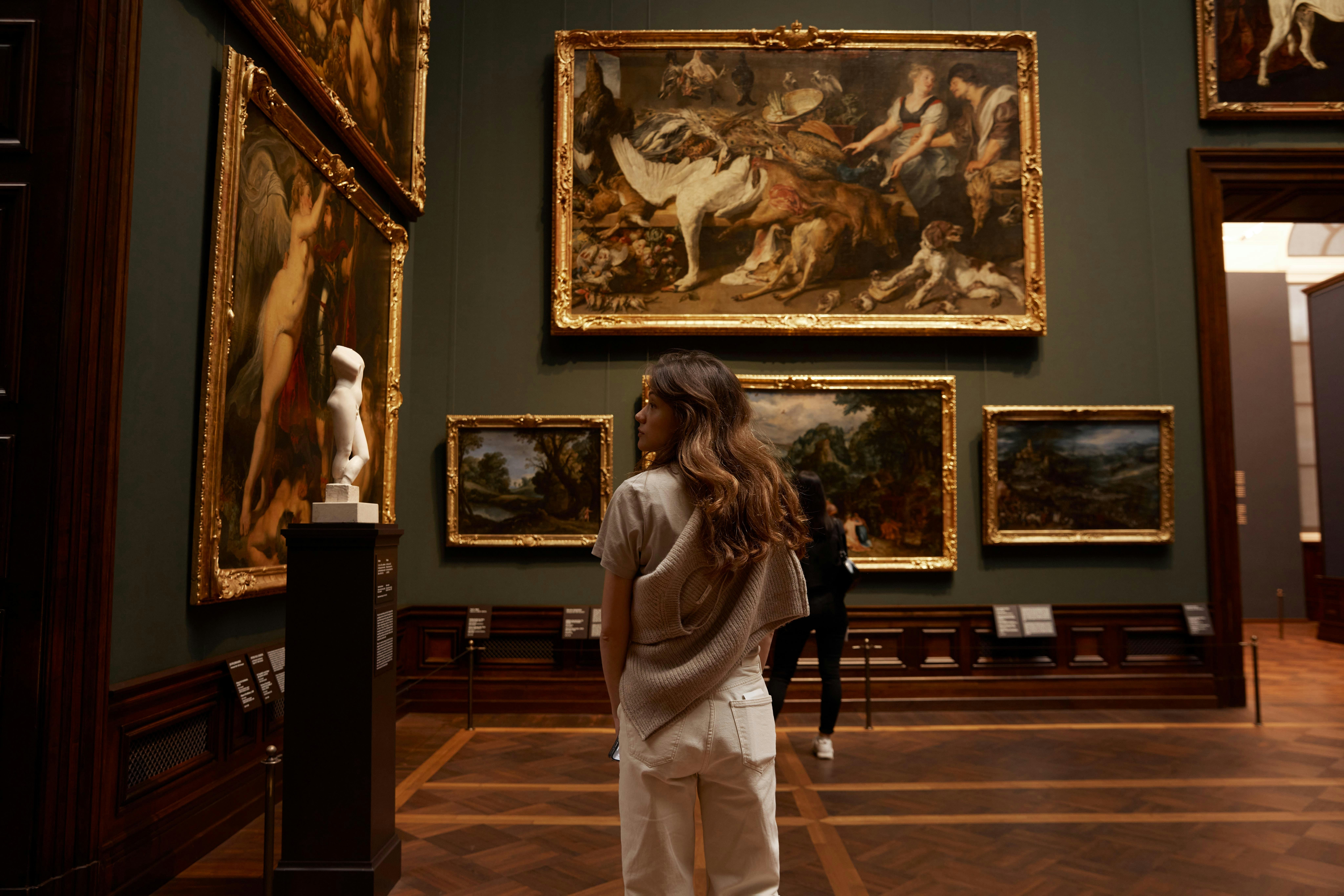
Language, art, and music are slowly becoming de-valued. The skill of developing taste and curating your own, personal aesthetic is a dying skill because we consume so much through streaming networks and are subtly encouraged to listen or watch a certain something without deciding for ourselves.
AI generated art and bot accounts overrun our feeds. AI music is also becoming more prevalent and worryingly, there is no industry-wide practise of labelling such content. “Slop” (as it is not-so-affectionately called) is antithetical to warmth and drives us into an evermore dreary sort of future where the preciousness of human creativity; hands on pens, brushes, instruments, or keyboards (yes, I’ll allow it) is diminished. Sure, you can prompt generative AI to create something, but to label is as meaningful on the same level as something with a human touch, hours of toil, dedication, and heart behind it, is to misunderstand entirely what art is and has been for centuries.
AI slop isn’t just background noise; it will actively undermine public trust. As John Oliver recently highlighted, the Liar’s Dividend is a term for when real footage or facts are dismissed as fake, simply because they could have been AI-generated. This growing scepticism is toxic to civil discourse and democracy.
While platforms claim to be fighting misinformation, their algorithms still promote content that drives engagement, even if it’s misleading. Without clear AI labelling, even vigilant users struggle to discern what’s real.
-Murphy, ”Brain rot and the rise of AI Slop”, The Journal (IE), 31 July 2025
Stagnant sameness.
Culture feels stagnant and full of repackaged ideas. There are sequels and prequels everywhere. Cars, corporate branding, and film trailers are all more or less increasingly formulaic and often over-simplified as possible.
It feels like there are far too many talking heads just in it for the clicks. They take up their own little corner of the internet, spouting political commentary day-in and day-out. I notice this on TikTok and some haphazard podcasts where dozens of creators share “breaking news” multiple times a day. They often stretch reality, fail to fact-check in favour of being one of the first to distribute a story, and use an urgent tone and inflammatory language that fails to articulate the nuance of any given situation. This sort of content is damaging to society on a broad scale because it leads to the propogation of wild, unfounded ideas and outright falsehoods. On a more banale level is sloppy and unrefined, adding little to no value to an already oversaturated media landscape.
Technology fragments us by driving us into our own thought-bubbles online while simultaneously funnelling us into this bland, watered-down sameness. Third wave cafés tend to look the same wherever you go in the world thanks to the influence of Instagram. You know the look: black lettering on a white menu, plants, some exposed brick or wood for texture. And even though our homes have always been decorated around trends to some extent, when I drive around suburban America, the lack of creativity of expression is glaringly apparent. I’ll admit, even my own home is in need of more ecclectic energy - and in every case, I blame the internet.
More accurately, I blame our approach to the internet and how we relate to it.
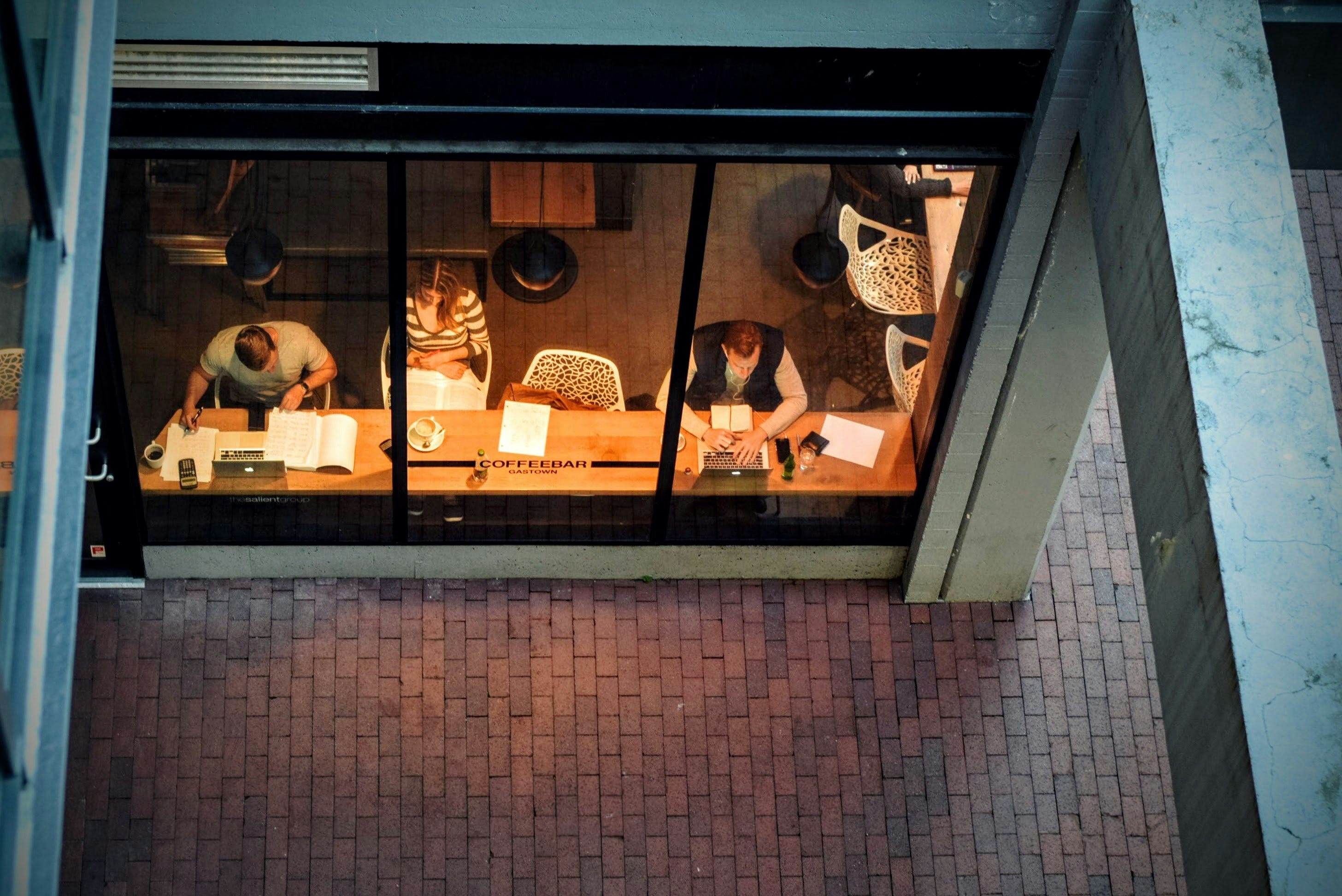
When all the world becomes predictable and drab, it absorbs the sense of excitement and possibility there once was, along with a feeling of warmth and connectedness.
It is becoming increasingly difficult to live a predominantly “offline” life, and not just in the sense of being able to get by without a smart phone, but in that everywhere we go, conversation is commonly driven by what is happening in the digital world. “Have you seen this or that video?” etc. It is strange how we derive so much of our meaning making and orient our place in history by the dialogue happening online when the moments which most deeply impact us happen in the physical world: think; love, death, friendships, break-ups, nights out, travel.
What we’re going to remember are the tangible things that made us feel real emotion and led to substantial progress in our lives. The times when we discover more of ourselves through experience lasts, while memes are easily forgotten.
I suppose you could it is natural: as technology progresses, culture changes. Some aspects of this are unavoidable, but I hope we are wise enough to hang on to the things that touch the part of our soul that has remained constant for thousands of years: art, literature, music, conversation, and socialising face-to-face. However advanced we become, we have not outgrown our need for this things.
We will always have a space inside of us that can only be filled by ardent sincerity. This is why too much screen time leaves us tired and lacking fulfillment.
Third places and community.
Third places are declining because we can opt to stay home more often. Thanks to streaming entertainment and delivery services, we never need to risk an uncomfortable situation in public, wait in line bored, or be even mildly inconvenienced. While I welcome this on a bad day or in a pinch, over time it can lead to a deterioration of experience. The pandemic was a shared event worldwide and it caused humanity to come up with new ways of circumventing the need for physically gathering to stop the spread of disease. While productive to that end, a new problem was birthed: an ability to choose isolation over community. We can’t just put the lid back on that box either; we must choose for ourselves how to live.
If you would have showed me in 2010 (the year I graduated college) what our relationship would be like with our phones and technology in 2025, I probably would have rolled my eyes and insisted that we would never want to be so detached or place so much emphasis on our online persona when the “real-world” was so much more satisfying.
The term “third place” was coined by the urban sociologist Ray Oldenburg in his 1989 book, “The Great Good Place.” It refers to spaces outside of home and work (one’s first and second places) where friends and strangers can gather unrushed — like cafes, bars, hair salons, dog parks and gyms. In some conceptions, the term refers to places where you don’t have to buy anything to hang out.
“Public leisure space is critical for society. If you don’t build places to gather, it makes us more strange, and strangeness creates anxiety.”
-Ephrat Livni, ”Where have all the ‘Third Places’ gone?”, NY Times (28 Feb. 2025)
When a blackout generated warmth.
On 28 April of this year, the Iberian Peninsula experienced a blackout that lasted about 10 hours. Trains were stalled, street lights went out, and mobile service crashed, leaving people’s electronic devices unusable. It revealed our over-reliance on the internet and though a large-scale power outage is a true emergency, this experience also reminded us just how quickly people regain a sense of real-world connection when your phone isn’t an option.
In Barcelona’s Gracia neighborhood, squares were packed with sunbathers and people reading books or playing chess. In Madrid, young and old gathered on sidewalks to listen to radios that, once obsolete, were suddenly lifelines. People in Sevilla clapped and tapped their feet to flamenco.
Some neighbors spoke to each other for the first time.
-”No power, no problem”, AP News (29 April 2025)
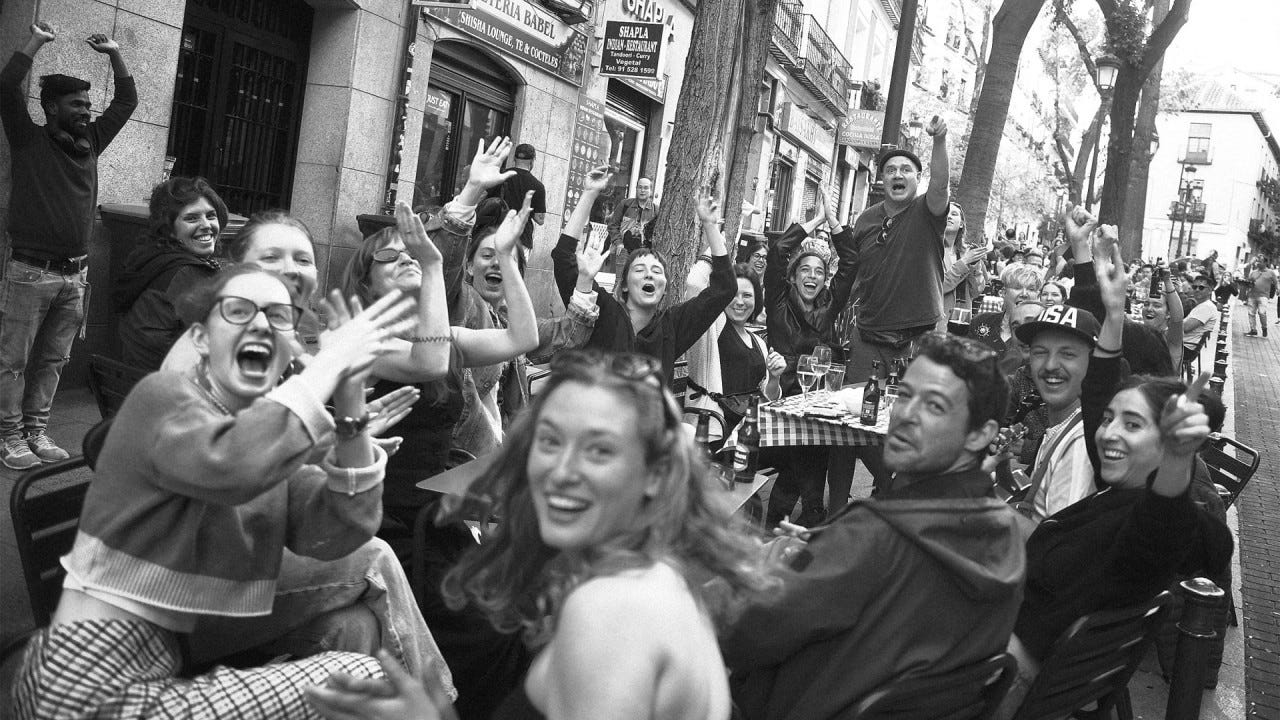
I recall seeing someone say that they wished the blackout would have continued because of how joyous it felt to be without distraction and to have such a sense of unity with others over a shared experience. Instead, when the notifications resumed, people were right back to old habits. The thing about this sentiment is that we can always choose to conduct ourselves mostly offline. It doesn’t have to end when the electricity begins buzzing again.
We live in a monumental moment, not because of the technological progress we’ve made but because we can have the best of both modernity and timeless tradition. It is up to us to exercise restraint when it comes to screens and lean in to the lifestyle we find most appealing. Nothing is stopping us from going inside the café to order and sit for a while, shopping in the store, waiting in the lines, writing with pen and paper, reading a physical book, sitting still and staring at the ceiling while you listen intently to a piece of music, or engaging with people in our communities.
Letting warmth in.
Warmth is community, creativitiy, and connection. It is inspiration, energy, love, and a sense that you are a part of the planet and not just a being inhabiting it being subjected to its whims. Warmth creates an aura of possibility. We channel warmth from our surroundings: seeing someone on the street and appreciating their unique outfit, making your living space your own, or sifting through new music and curating a playlist that has purpose and makes you feel with sincerity. Warmth is derived from an honest conversation and coming to the realisation that maybe that co-worker who holds opposing political views is genuinely a decent person who has many of the same priorities as you, with more in common than not. Moments like that stir optimism and make the world feel more hopeful than hopeless.
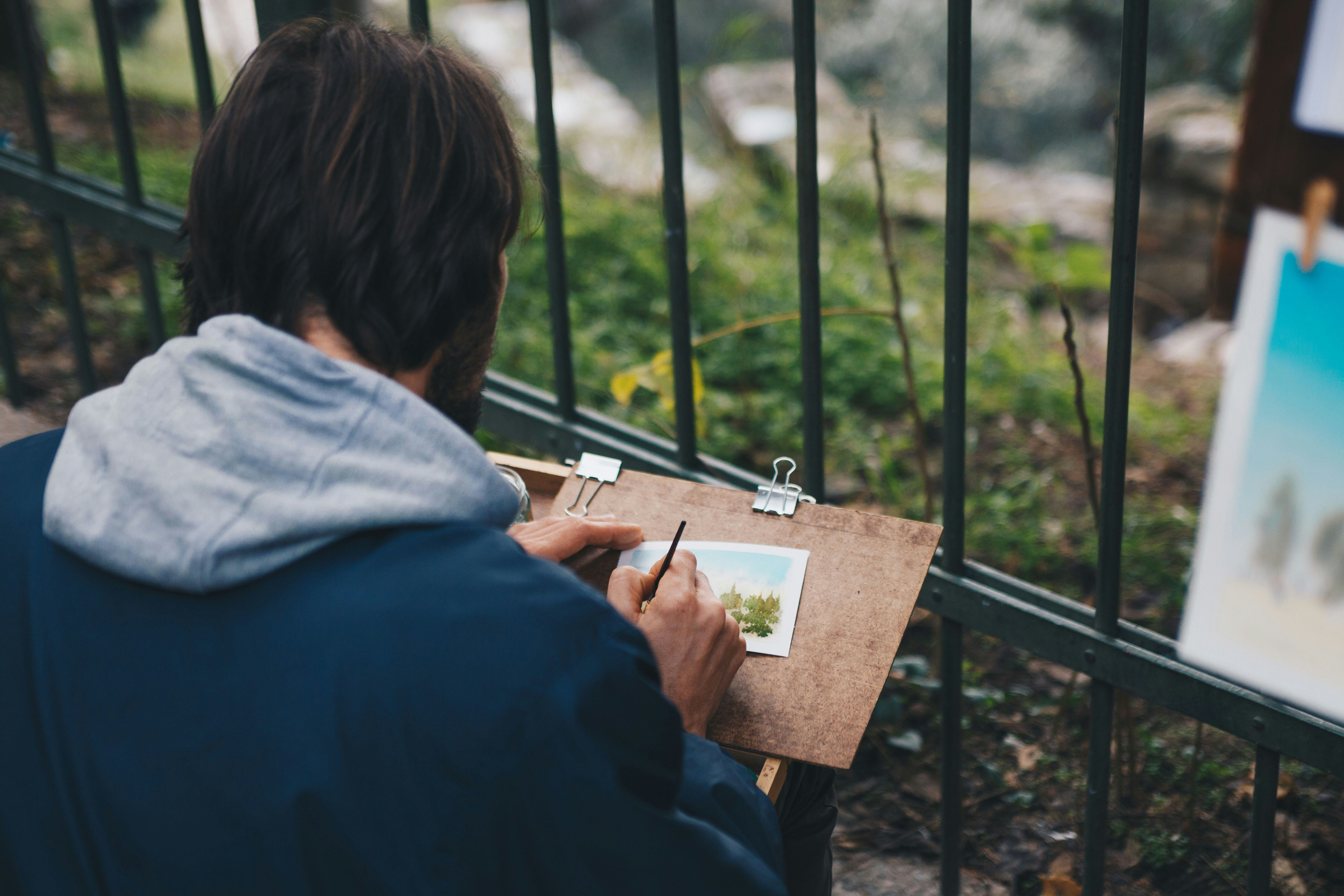
We can let it in if we want to, but we have to be intentional. Because our lives are becoming increasingly centred around our screens, escaping them takes more effort: it takes actively choosing to turn them off or leave them behind for a while.
There is no warmth where there is algorithmic coercion or mindless behaviour. Let that be your guide.
The big tech companies—Meta, Amazon, Apple, Alphabet—control our attention and mediate our transactions, he says, turning humans into digital serfs incessantly posting, scrolling, and buying on their platforms. Rather than chasing profits that derive from labor, the tech overlords, whom he calls “cloudalists,” extract “rents.”
-Kolhatkar, ”Has capitalism been replaced by Technofeudalism?”, The New Yorker, 25 March 2024
I worry that as technofeudalism is creeping in on our daily lives, it will be impossible to not be plugged in, thus making it even more difficult to remain attached to what makes us most human. It becomes more of a privilege to unplug with each passing day, which is why I think it is important to do it as much as possible, here and now.

Warmth gives life meaning, feeling and adventure. Finding it requires developing a sense of identity which requires an ability to let go and be moved and drawn emotionally in to a focused experience. What we need is freedom to explore our world without the heavy hand of an algorithm steering us where it wants us to go. Letting big tech. take all of the autonomy of curation from us would be a sad end.
Deciding to channel warmth upon everyday life and live with an enthusiasm for more connected experiences is a quiet rebellion to a world that subtly pushes us into cynicism and disingenous behaviour. I also believe, it is how we retain all that is good and beautiful about being human. It might not be essential to our survival as a species, but it is a vital factor in enjoying our time here and making the very most of our lives on a personal level.
Let us not sink into pessimism, waking up one day wondering, “where did all the time go?”