
On AI and feeling something.
Maintaining our sensitivity and staying human (featuring inspiration).

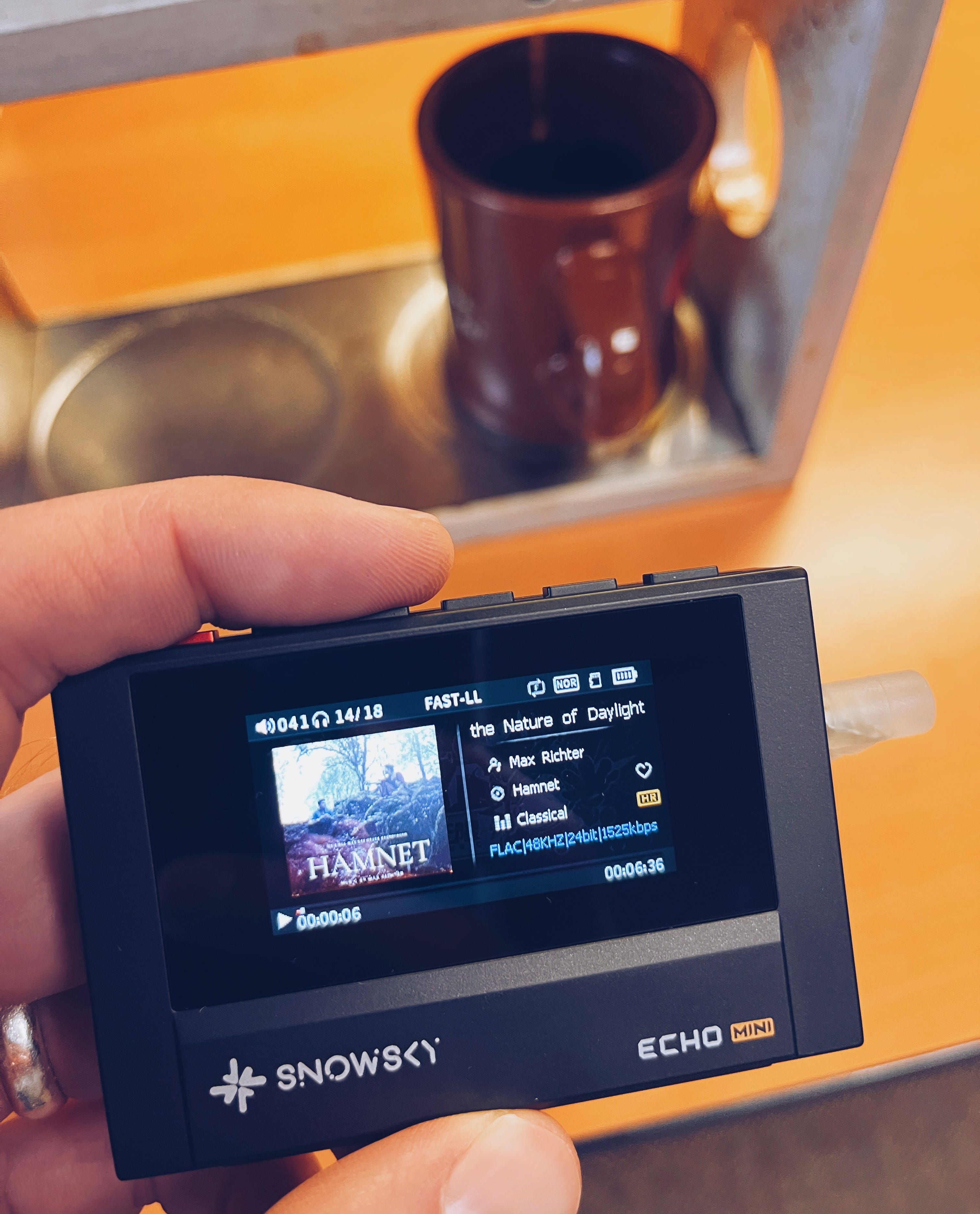
The drip of brewing coffee could be heard over the low volume of my Mp3 player; Max Richter’s “On The Nature of Daylight” easing me into my morning. I’ve made a habit of starting most work days slowly, with some music and journaling. It serves as a nice transition from my hour-long commute to the monotonous, unvaried work I am about to commence.
After some writing and a few stunning compositions from the “Hamnet” soundtrack, I sit down with my coffee, pull my moderately comfortable chair more closely to my desk and open Outlook. Junk, junk…one that can wait until later, and then, I am greeted with an email to all staff marked “urgent”.
It read, more or less: “You are now authorised to use Copilot to summarise emails and write email correspondence. Please remember to double check your work when using AI.”
I should feel grateful right? It took this long. I know friends who have had this pushed on them, mandated even, since last year. The nature of my work saved me from this for a little while and even now, it can only be used lightly, but as much as I try, it’s hard to feel any sense of appreciation for the delay or minuscule impact: it feels like something vital is being stolen from us, in exchange for the small bit of good these tools can potentially provide. My coworker calls from over the cubicle wall, “Dylan…did you see this about Copilot?” I sigh, “…yes.” To my satisfaction, he remarks as he deletes the email, “No way am I using this.”
Generally speaking, I’m of the opinion that AI is going to fail to live up to the expectations of even its most ardent supporters. It will sparkle and fade into a much more mundane type of daily usage. What I worry about most is the impact of generative AI on art and people developing an over dependence on it as a search tool, eroding cognitive faculties and critical thought.
The good news is that the ability to have a proper attention span hasn’t gone away; the hard part is reconciling our bad habits and providing ourselves with the right conditions. It is a battle which has to be fought on the personal front.1
I’d recommend this interview between Tristan Harris and Nate Hagen on The Great Simplification podcast for some sane and encouraging news about AI amidst the slop and impending doom around every corner. It offers us a “species rite of passage” moment as Tristan points out. It isn’t too late.
Feeling.
I’ve been writing a lot in my journal lately about the struggle to feel given the current state of things. There are stretches of quiet reading, writing, walking, and focus built in to my routine, but something has been lost somewhere deeper, in the soul of it all. Perhaps it is a reflex from negative past experiences to harden myself for fear of feeling future pain, or could it just be that I have been living in the shallows lately?
Recalling my teens and twenties, I reminisce how a new song or particularly well-written and artistic film more easily rendered me speechless or brought tears. I’d listen to music on repeat, discovering something new with every revolution. This usually ended with me, guitar in hand, writing feverishly.
This track from The Civil Wars comes to mind: the hours I spent playing it, trying to write something as poignant for my own set.
In recent years though, juxtaposed against what feels like an enormous amount of character growth and self-discovery, an underlying stoicism has developed: and I despise it. Setting the misguided understanding and cultural fascination with stoicism aside, it proves useful in certain moments, yes, but now, I want to shed this more callous exterior and render my soul more human again; more vulnerable, empathetic, and tender; better able to connect with art, people, and have genuine interaction without pretence.
What frustrates me most is how the digital obsession has wormed its way into each crevice of our world. It is hardly avoidable. You could leave your phone at home, go out to a store or café or on a hike; anywhere else, and somewhere along the way, you would be subjected to the ambient sounds of other people’s phones. It is its own kind of noise pollution. You can set personal boundaries and do everything right to protect your peace, and still fail to experience quiet.
AI feels like a harbinger of the further decline of our attention and the human ability to honestly access our own emotions. This includes intimately knowing how we feel about the state of the world, a piece of music, our career path, a work of art, or our relationship to others. The external input is so intense and the distraction so incessant, we are consistently robbed of opportunities for reflection: when the most important feelings tend to arise; the feelings which create new opportunities for growth, we have already moved on.
I am well in-tune with the negative side-effects of AI and social media, and even still am (very) susceptible. It makes no matter who you are, how much you know, or how aware, your mind is still wired in such a way that the ease and instant gratification of a screen can hijack it. No one is immune and that is why it’s so essential to develop your own guardrails and boundaries. We can’t wait for Silicon Valley to respect our attention, because they never will.
What we risk losing.
Should we give ourselves over to the misleading promises of AI, I cannot help but worry that we will lose much of what makes us human, including our ability to feel, and articulate those feelings. Even if it does only turn out to be nothing more than a glorified search engine or research tool in the long run, the impact will still be tangible. We have all seen the “slop” and the edits, the misleading deep fakes…and this is as bad as this technology is ever going to be. It only gets more convincing from here. Now is the time to devote ourselves to something higher.
The future of style and what it means to be human is at stake.
These findings suggest a scenario where machines, originally trained on human data and subsequently exhibiting their own cultural traits, can, in turn, measurably reshape human culture.2
In the face of this, I want to cling to the things which are timeless and products of total human creativity and artistic expression.
Adam Walker of Close Reading Poetry goes deeper here into how AI is flattening our language and as a result, our thinking. Since embarking on my pursuit of reading more Classics, what is most stark is the difference, and I would say, the decline, of the English language over time. By resisting AI, embracing and experiencing the greatest writers, and by patiently and consistently improving our own language, we can enrich and bring a unique voice into our shared future.
T.S. Eliot reminds us of the need for a new voice as we carry on into the future in “Little Gidding”:
For last year’s words belong to last year’s language
And next year’s words await another voice.
And to make an end is to make a beginning.
The potency of humane art.
The final scene of “Hamnet” wrecked me. It is one of only a few cases where I can say, the film perhaps outdid the novel. And, I thought the novel was refreshingly imaginative and spectacular. I wept, then watched it again and wept some more. It channels emotions which are so enduring across time. If you are a parent, you feel it profoundly. Everyone involved, on and off screen, deserves praise. It feels like the sort of thing we should never want to relinquish: the product of an author’s honest use of her artistic creativity; the result of years of thoughtful research and writing: entirely constructed from the power of her imagination.
Exceptional literature and film will always exist, but despite its existence, if we lower our bar to that of AI generated and/or short-form content and if that is the majority of what we take in, we are missing out on so damn much. We have to ask ourselves, what will we allow our attention to settle on to make this already short life that much more beautiful?
We should be most willing to be moved! Even if it makes us uncomfortable or sad or angry or unsettled. A friend recently reminded me that this is what art is for. This is what enriches our human experience and encourages our flourishing.
When death comes.
Each time I contemplate my relationship to technology and art, my thoughts culminate in some type of inner-argument about the way I am currently living and how I will reflect upon my choices when death comes. A few weeks weeks ago during a conversation with one of our children my wife said, “I don’t think it matters how long you live”, to make the point that it is the experiences we have in whatever time we are granted which matter most.
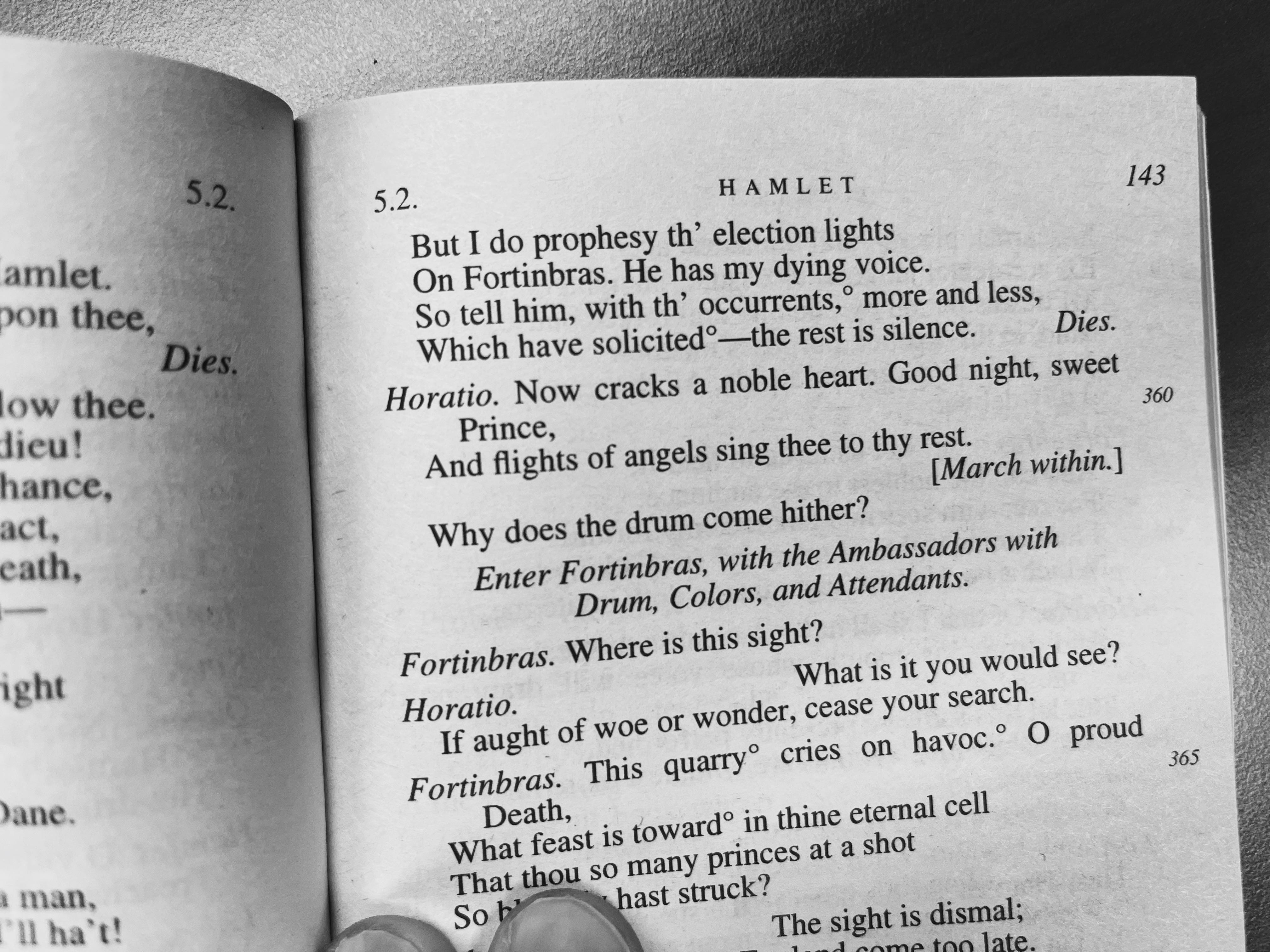
It’s an argument made so many times that I think it risks losing its pull. We engage in rote thinking and projecting so often, it is good to direct ourselves from time to time to the more thorough practise of sincere reflection and a re-assessment of our beliefs, priorities, and routine.
When it comes to this sort of thing, Mary Oliver doesn’t miss.
“When Death Comes”
When death comes
like the hungry bear in autumn;
when death comes and takes all the bright coins from his purse

to buy me, and snaps the purse shut;
when death comes
like the measle-pox

when death comes
like an iceberg between the shoulder blades,

I want to step through the door full of curiosity, wondering:
what is it going to be like, that cottage of darkness?

And therefore I look upon everything
as a brotherhood and a sisterhood,
and I look upon time as no more than an idea,
and I consider eternity as another possibility,

and I think of each life as a flower, as common
as a field daisy, and as singular,

and each name a comfortable music in the mouth,
tending, as all music does, toward silence,

and each body a lion of courage, and something
precious to the earth.

When it's over, I want to say all my life
I was a bride married to amazement.
I was the bridegroom, taking the world into my arms.

When it's over, I don't want to wonder
if I have made of my life something particular, and real.

I don't want to find myself sighing and frightened,
or full of argument.

I don't want to end up simply having visited this world
I don’t want to end up simply having visited this world, either.
The thing is, ending life with the satisfaction that you have lived, not simply visited, begins in this moment, with this breath.
Wherever you are now could be the beginning of a richer life; one you will look back on fondly and with pride. We say this over and over, we know it intellectually, but for some of us, myself included, it is a good time to be reminded how much more gratifying life is when you move with a higher awareness. Life change does not hinge on just one point of total and enduring course correction. It is a series of starts and stops where we take stock of things. We live for a while, we notice we are off track, check-in, refresh ourselves and carry on more rightly.
Life is a series of noticings.
I don’t want to be constantly derailed by the warm glow of digital distraction or reduced to someone who cannot make a decision without consulting a machine. I want to be curious, attentive, and freed up to notice.
Chekhov’s Laevsky and future optimism.
After reading Anton Chekhov’s, “The Duel”, Laevsky comes to mind. He starts off a drinker, gambler, and womaniser - living an addictive and impulsive life. Unhappy in his relationship, bored by his geography, and disenchanted by even the beauty of nature, he hides behind his intellectual and jovial exterior and when pressed, cannot provide a reason for why he lives in such a way.
At the outset, he is the kind of person I wish not to be. Yet, he “discovers a world outside (his) egocentric concerns”, and I think we too ought to have faith in a more promising future.3 At present, the future sometimes looks like the hell that is the unavoidable and overwhelming onset of ubiquitous AI, surveillance over-reach, the elimination of what little privacy we still retain, and an incessant buzz of notifications as what it means to be human becomes fuzzier until it fades completely.
We can resist the trends, and I do believe, that more than less of are on the same page here.4 By pursuing a more analogue, deeper experience we can create a future with its own voice; one that is respectable and more accurately conveys the optimism and great potential humanity holds. That potential is still present underneath the bleak headlines, the slop, and your supervisor’s call to use AI in the workplace. Believe it.
This means choosing silence in a noisy world. It means putting down the device, reading the greats, looking for quality works of art to learn from, and fleshing out your thoughts in a journal and with other curious minds. It requires a commitment to living more slowly and deliberately and embracing the harder work of honing your skills the same patient and committed way those before you have done for centuries. It worked for them and will work in futurum. For that is human and what is human will never fail us.
Adam, “Are attention spans really shrinking?”, Nature, 06 May, 2026. https://www.nature.com/articles/d41586-026-01407-w
Adami, “How AI-generated prose diverges from human writing and why it matters”, 09 December 2025. https://reutersinstitute.politics.ox.ac.uk/news/how-ai-generated-prose-diverges-human-writing-and-why-it-matters#:~:text=Other%20research%20suggests%20that%20AI%20may%20be,LLMs%20are%20accelerating%20language%20changes%20already%20underway
Borny, Chapter 1. Chekhov’s Vision of Reality, “Interpreting Chekhov”, pp. 21-36. 2006. https://www.jstor.org/stable/j.ctt2jbjpn.6
Swezey and Constanz, “In the United States, some undergraduates are resisting the call of AI”, 23 May 2026. https://www.straitstimes.com/life/in-the-united-states-some-undergraduates-are-resisting-the-call-of-ai
"We have to ask ourselves, what will we allow our attention to settle on to make this already short life that much more beautiful?"
Thank you, Dylan, for this deep meditation on life and this one crucial life source: our noticings.
So much to dwell on, but on this beautiful Sunday morning, I am happy to have found, with your help, these words by T. S. Eliot:
"We shall not cease from exploration And the end of all our exploring
Will be to arrive where we started And know the place for the first time."
That just cannot be outsourced to any AI.
Many many years ago, I used to embark on periodic urban dérive adventures to the nearest metro area I could get to via public transit. I enjoyed the temporary disconnect from the otherwise incessant pings of digital tech. I would take photos of random objects and scenes at odd angles, but perhaps I should have used a DSLR(?) because I became a target for panhandlers who thought I was a dumb tourist. Now I mostly blab on Substack while keeping a wary eye scanning all the generative AI developments.